

Introduction
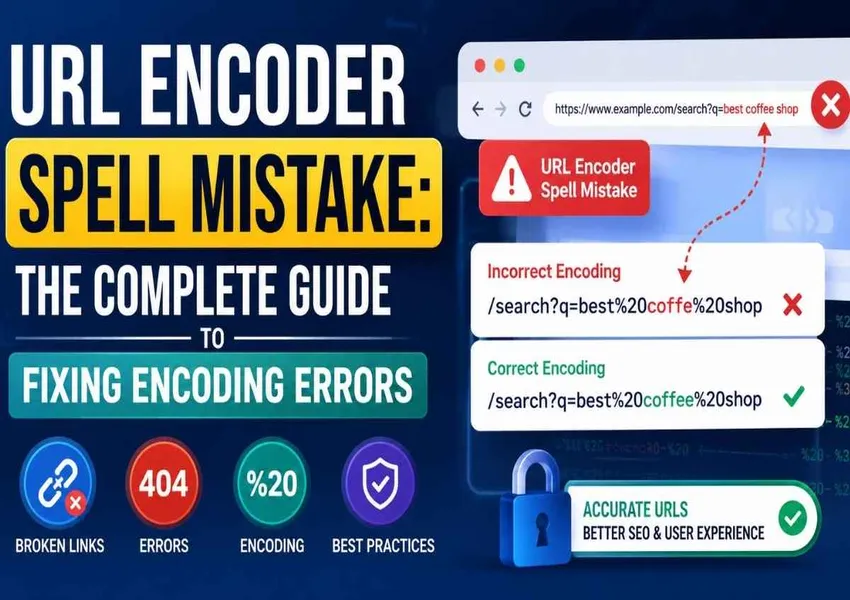
If you’ve encountered a url encoder and decoder spellmistake, you’re not alone. Developers, students, SEO professionals, and website owners frequently make small mistakes while encoding or decoding URLs. Although these errors may seem minor, they can lead to broken links, incorrect redirects, failed API requests, or problems with web applications. Understanding why these mistakes occur and how to avoid them can save valuable time and prevent unnecessary troubleshooting.
What Is URL Encoding?
URL encoding is the process of converting characters that cannot safely appear in a URL into a format that web browsers and servers can understand. Spaces, symbols, and special characters are replaced with percentage-based codes.
For example:
- Space becomes
%20 &becomes%26#becomes%23
Proper encoding ensures that URLs remain valid across different browsers and operating systems.
Many users searching for url encoder and decoder spellmistake are actually trying to understand why their encoded links do not work correctly.
What Is URL Decoding?
URL decoding performs the opposite task. It converts encoded characters back into their original readable form.
For example:
Hello%20World
becomes
Hello World
This process is commonly used by web applications after receiving encoded information from browsers or APIs.
Why Do Encoding Mistakes Happen?
Several common reasons contribute to encoding problems.
Incorrect Tool Usage
Using the wrong online tool or software may produce unexpected results if it doesn’t support the required character encoding standard.
Double Encoding
One of the most common problems occurs when a URL is encoded twice.
Example:
Instead of:
Hello%20World
It becomes:
Hello%2520World
This creates invalid links and unexpected application behavior.
Many developers researching url encoder and decoder spellmistake eventually discover that double encoding is the actual cause of their issue.
Manual Editing
Editing encoded URLs by hand often introduces accidental errors. Removing or changing even a single character may break the entire URL.
Common Encoding Errors
Several mistakes appear repeatedly during web development.
Encoding Reserved Characters Incorrectly
Reserved characters have special meanings inside URLs. Encoding them incorrectly may change how browsers interpret the address.
Mixing Different Character Sets
Modern websites generally use UTF-8 encoding. Mixing character sets can create unreadable symbols or corrupted URLs.
Forgetting to Decode Data
Some applications display encoded values directly because developers forget to decode incoming information before presenting it to users.
These situations frequently appear in discussions about url encoder and decoder spellmistake because they are among the most common real-world problems.
Why URL Encoding Matters
Correct URL encoding improves:
- Website reliability
- Browser compatibility
- API communication
- Search engine crawling
- User experience
- Data accuracy
Without proper encoding, even simple links can fail unexpectedly.
Best Practices
Use Trusted Libraries
Programming languages include built-in functions for encoding and decoding URLs.
Examples include:
- JavaScript
- Python
- PHP
- Java
- C#
- Go
Built-in libraries reduce human error and improve consistency.
Never Encode Twice
Always verify whether data has already been encoded before applying another encoding function.
This simple habit prevents many url encoder and decoder spellmistake issues during development.
Test URLs Carefully
Before deploying websites or applications, test every important URL using multiple browsers and devices.
Proper testing quickly identifies broken links caused by incorrect encoding.
URL Encoding in SEO
SEO professionals often work with encoded URLs containing international characters, tracking parameters, or special symbols.
Improper encoding may create:
- Duplicate pages
- Broken internal links
- Crawl errors
- Redirect failures
Understanding url encoder and decoder spellmistake helps SEO specialists maintain healthy website structures and improve search engine accessibility.
Common Developer Scenarios
Developers encounter URL encoding in many situations:
- API requests
- Login forms
- Search parameters
- File downloads
- Email verification links
- Payment gateways
Each scenario requires accurate encoding and decoding to ensure information reaches its destination correctly.
How to Avoid Future Problems
Follow these practical recommendations:
- Use reliable encoding libraries.
- Avoid manually editing encoded URLs.
- Verify character encoding standards.
- Test links before publishing.
- Decode data only when appropriate.
- Document encoding procedures for development teams.
These habits significantly reduce the chance of encountering url encoder and decoder spellmistake during future projects.
Benefits of Proper URL Encoding
Correct implementation offers several advantages:
- More reliable websites
- Better application security
- Accurate data transmission
- Improved compatibility
- Easier debugging
- Better user experience
Small improvements in encoding practices often prevent larger technical problems later.
Conclusion
URL encoding and decoding are essential parts of modern web development. Although the concepts appear simple, small mistakes can create significant issues for websites, APIs, and online applications. Understanding common causes such as double encoding, incorrect character sets, and manual editing helps developers build more reliable systems.
Whether you’re creating websites, managing APIs, or improving SEO, learning how to prevent url encoder and decoder spellmistake will save time and improve overall performance. By using trusted tools, testing URLs carefully, and following established best practices, you can avoid many common errors. As web technologies continue to evolve, understanding url encoder and decoder spellmistake remains an important skill for anyone working with URLs, online platforms, or digital applications.
